Why Red Ink?
When I was a kid, I struggled to relate to the stories being told by patients in the bleeding disorders world. At every conference or event my family went to, I would listen hard, trying to understand the complicated, intense journeys they shared. Their experiences seemed so different from mine, then. I was diagnosed with mild hemophilia at age six, had experienced some significant bruising episodes but nothing that required serious medication (factor infusion); I rarely missed school, rarely had to go to the hematologist, rarely felt ill. The first part of my hemophilia story wasn’t a dire one, or a distinctly negative one; it was indeed much better than that of most other women with a bleeding disorder, who typically aren’t diagnosed until 16 years after they first present symptoms. However, despite the homeostasis of the first few years after my diagnosis, there were soon to come two major changes within my rare disease journey.
The first of these changes occurred when I was 10 years old; I had just gotten my period a few months before going to my yearly check-in at the hematologist. Though it hadn’t gotten bad, yet, the doctors suggested that I take a hormone-based, injectable contraceptive (with an FDA black box warning) that would in theory stop my period all together – they would see me in two years unless something bad happened that couldn’t be fixed at the emergency room. My mom and I left the clinic that day with more questions than answers, but with one decision: we needed to find a better solution for me. For the first time I was completely unsure of my own body, an incredibly strange feeling for a kid who loved to run around and climb trees with her friends.
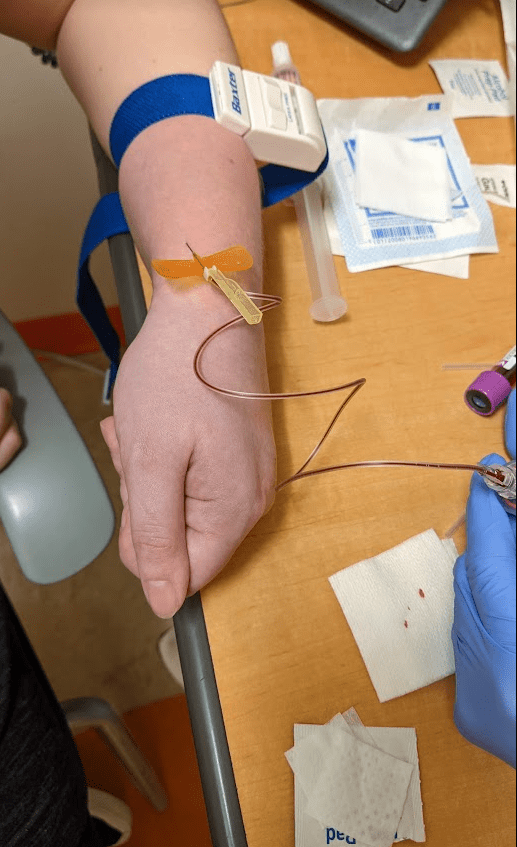
The second major change, more of a revolution, came six years later, when a different hematologist prescribed me a medication that targeted my low factor levels to decrease bleeding during my period. After an increase in symptoms that were detrimental to both my physical and mental health, and a proportional increase in missed school days and increased trips to the doctor, it felt like a miracle to be taken seriously, and to be treated seriously. Over the course of my 11th grade year, I learned to stick a needle into the veins on my hand at precisely the right spot to hit the vein without puncturing it so I could take the replacement factor medication. It has been hard, but it has helped so much.
It was this revolution in my rare disease story that inspired me to found Red Ink. No woman should struggle to be heard, nor should she struggle to understand her own story. It is my mission to change how we view this complex, ever-evolving narrative of women within the bleeding disorders community, as well as within the broader community that encompasses and connects everyone living with a rare disease. We often get so enmeshed in the complexities of living with a rare disease that it’s hard to see the bigger picture; the day-to-day phone calls and bills, and the aches and pains of our individual rare diseases distract us from seeing one another. It is easy to get wrapped up in our own stories, our own struggles. But while we are all different, we are not all alone, and we must recognize that our stories are more powerful, together: we are more powerful, together, a united front for change.
My journey is full of parallels: six years to get a diagnosis, six years to get the right treatment. I believe that within another six years we can change the face of bleeding disorders treatment for women. I believe that within six years, we can end the Period Tax, mandate RUSP alignment, shorten the window between the achievement of diagnosis and the prescription of appropriate treatment, increase the number of women represented in all levels of research and clinical trials, and most importantly, take control of our care. Together, we can rewrite the narrative for all women with bleeding disorders.
I hope you’ll join me in The Red Ink Project.
 Red Ink